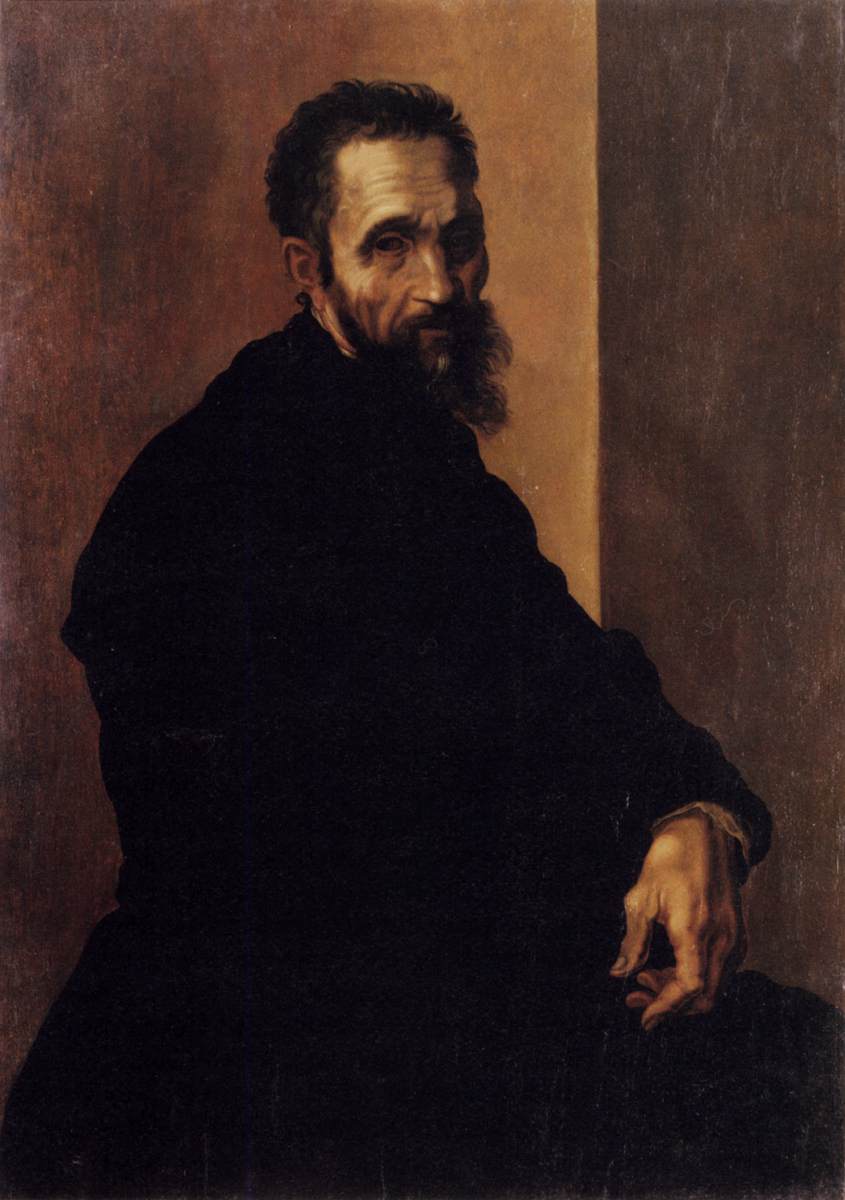
Michelangelo di Lodovico Buonarroti Simoni
Born on March 6, 1475, in Caprese, Tuscany, Michelangelo di Lodovico Buonarroti Simoni grew up in Florence. Immersed in humanist ideals and classical sculpture, he developed a conviction that art could reveal divine truth through the perfected human form.
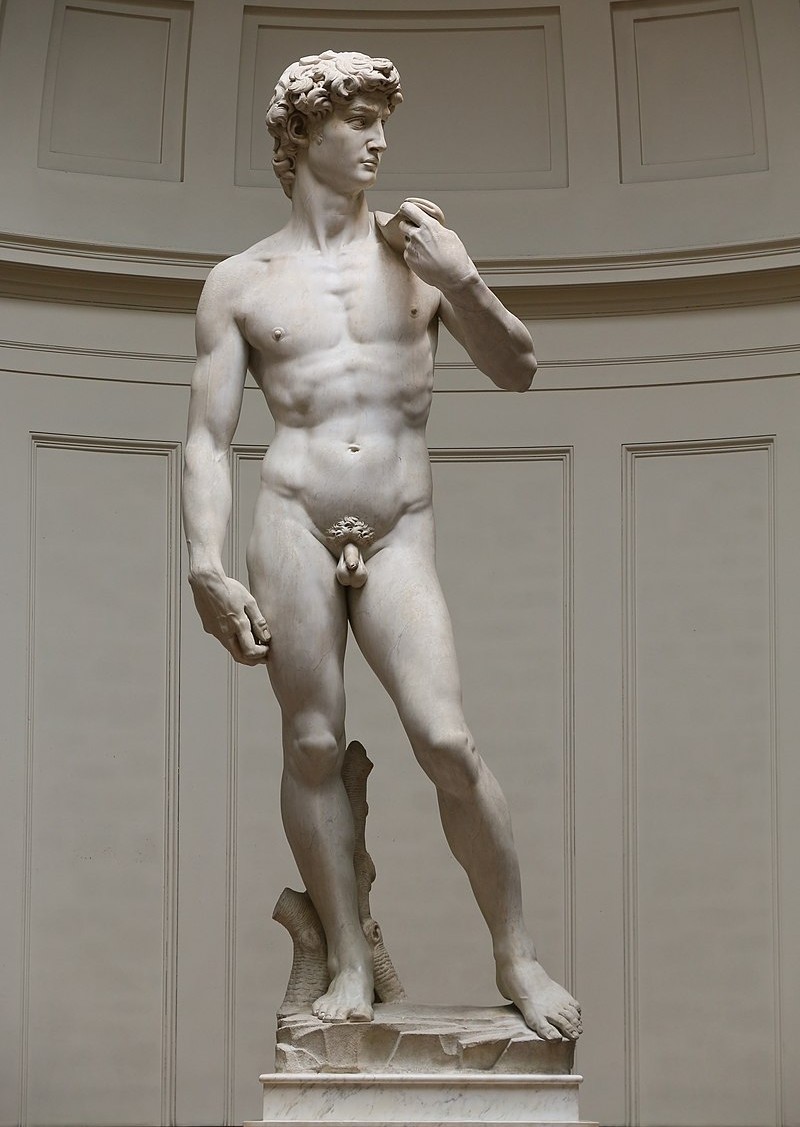
His early marble sculptures, including the Pietà and David, display anatomical precision fused with emotional depth, establishing him as the preeminent sculptor of his generation. He later expanded his practice across painting, architecture, and poetry, pushing the boundaries of artistic invention.
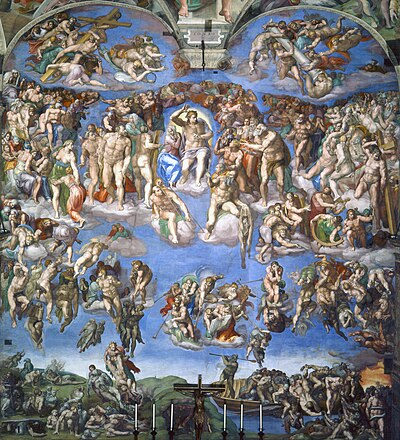
In his later career, Michelangelo designed the monumental dome of St. Peter’s Basilica and painted The Last Judgment, works that cemented his legacy across disciplines. He died on February 18, 1564, in Rome, and was laid to rest in Florence at the Basilica of Santa Croce, where his tomb honors a lifetime that helped define the Renaissance.
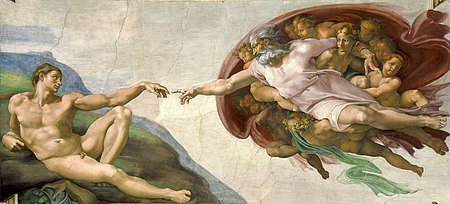
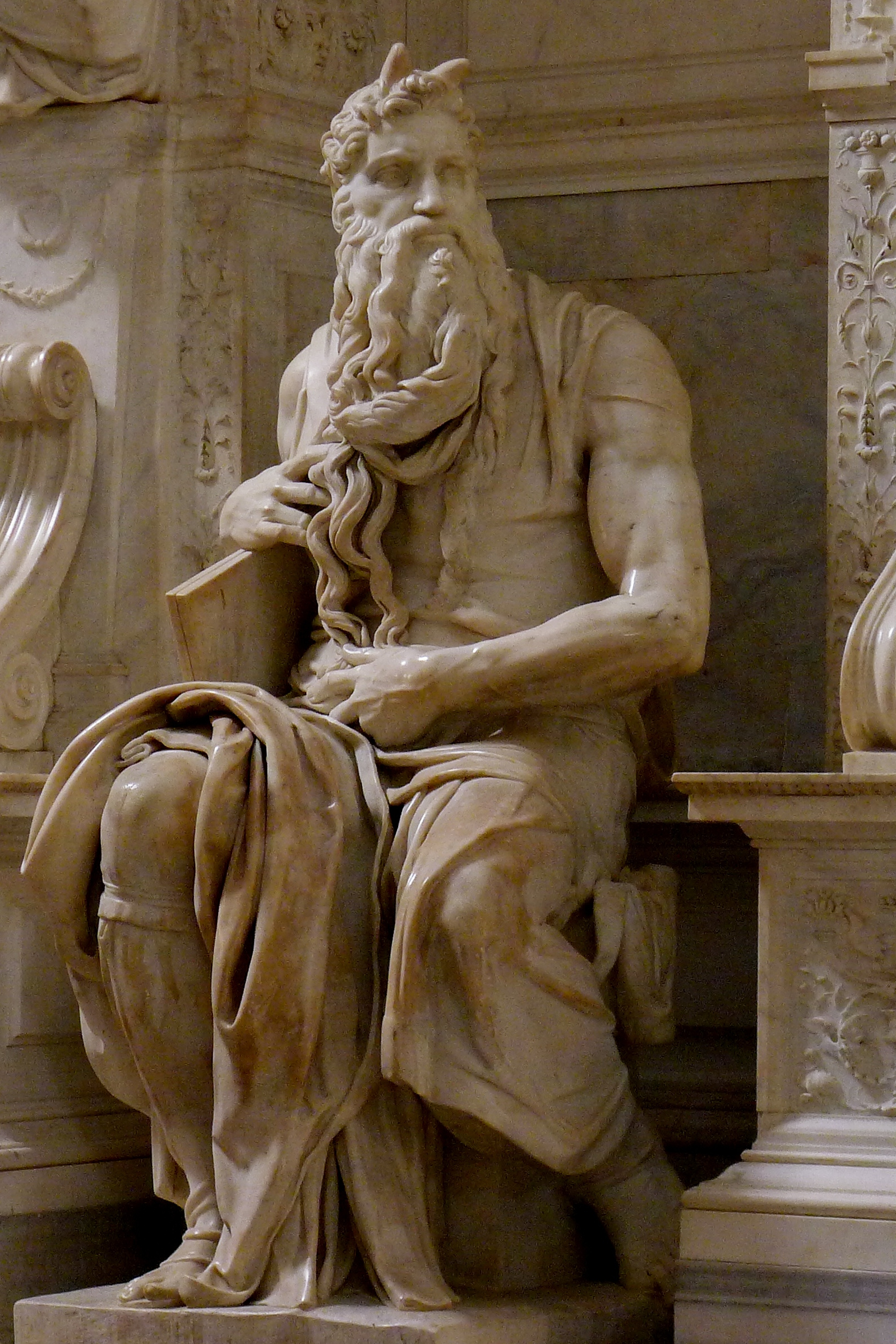
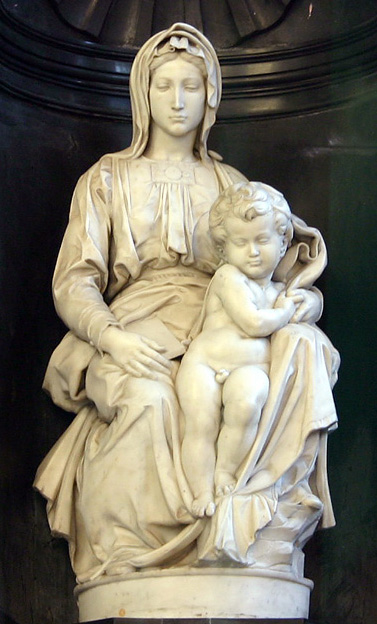
A selection of Michelangelo’s most iconic works across sculpture and painting.
Michelangelo’s recurring subjects—from the Madonna to monumental battle scenes—show how he transformed human form, motion, and spirituality into expressions of divine beauty. His techniques and compositions reveal both technical mastery and visionary imagination.
Madonna of the Stairs (1490–1492) reflects Donatello’s influence through shallow relief and dynamic motion. The twisting child already reveals the vitality that defined Michelangelo’s later works.
Madonna of Bruges (1504) and the Doni Tondo bring emotional intimacy to sacred themes.
Angel (1494–1495) studies anatomical realism, while Bacchus introduced a rotating form meant to be viewed from all sides.
Dying Slave (1513) embodies contrapposto and awakening consciousness within stone.
Between 1508 – 1512, Michelangelo painted nine Genesis scenes framed by twenty ignudi. His Study for the Libyan Sibyl shows unmatched anatomical precision and design.
Vasari praised the ceiling as “a beacon to our art, restoring light to a world in darkness.”
Battle of the Centaurs (1492) layers intertwined figures in bold relief. The lost Battle of Cascina (1504) developed this dynamism through full-scale drawings.
The Last Judgment transforms that struggle into a cosmic drama of salvation and despair.
In the Laurentian Library, Michelangelo designed recessed columns and a flowing staircase that anticipated Mannerism. At St Peter’s Basilica, he unified Bramante’s plan into monumental harmony.